
Christof Drexel
Hans Christof Drexel was born on April 2, 1886, in Königstein im Taunus and died on March 3, 1979, in Munich.
Hans Christof Drexel (April 2, 1886 in Königstein im Taunus; † March 3, 1979 in Munich) is considered, through his early works, one of the important representatives of the expressionist avant-garde. Born in 1886 in Königstein im Taunus, he initially studied medicine and architecture in Munich and, even during this period, published graphic works in the renowned art and literary magazine Jugend. Following the advice of the painter and academy professor Fritz von Uhde, he went to Paris in 1906/07, where he studied painting at the Académie Julian and came into direct contact with international modernism.
Show More
After his return, Hans Christof Drexel settled in Hagen, started a family, and was introduced by Karl Ernst Osthaus to the Folkwang Circle. In this inspiring environment, alongside figures such as Henry van de Velde, Emil Nolde, J. L. Matthieu Lauweriks, and Jan Thorn Prikker, he developed his distinctive expressive style.
In 1911, on behalf of Osthaus, he visited Henri Matisse in Paris; this was followed by a period of study at the Académie Matisse.
The First World War interrupted his artistic career. Seriously wounded at Verdun, Hans Christof Drexel recorded his front-line experiences in powerful “sketches from the field.”
After the end of the war, he returned to Hagen in 1919, joined the November Group and the artists’ association Das Junge Rheinland, and once again met Henri Matisse, Wassily Kandinsky, as well as the Munich publisher Reinhard Piper. He developed a close friendship with Christian Rohlfs.
Between 1919 and 1923, Drexel taught at the Folkwangschule.
In 1923, Hans Christof Drexel moved to Berlin. There, an important studio community emerged with Paul Klee and Lyonel Feininger. The progressive art dealer Alfred Flechtheim took him under contract.
Numerous exhibitions—including at the Folkwang Museum (his first solo exhibition in 1912), together with Emil Noldein 1917, and later at galleries run by Karl Nierendorf, Paul Cassirer, and Flechtheim—strengthened his reputation and enabled commercial success.
In 1926, Drexel developed his concept of “choral drawing,” a collaborative creative method with educational and psychotherapeutic aims, which later received wide attention and also led to a longer-term connection with Carl Gustav Jung.
In 1930, in Oslo, a decisive encounter took place for Hans Christof Drexel with Edvard Munch. In the years that followed, the two met several times, and in 1932 they exhibited together in Oslo.
In the same year, Drexel received the prestigious Villa Romana Prize, an honor he later lost after the National Socialists came to power. In 1937, he was prohibited from exhibiting, and Drexel was henceforth classified as “degenerate.”
During the Nazi era, Hans Christof Drexel earned his living as a color designer and as a teacher of “choral drawing.” His work was accompanied by travels to Norway, Sweden, and Finland.
In 1944, a bomb strike destroyed his studio in Berlin, and most of his early work was lost. After fleeing to Hindelang, he created numerous portraits of the local population.
In 1946, he settled in Munich, where his first lithographs were produced and where he taught at teacher training academies. During this period, his long-standing friendship with the philosopher and artist Hugo Kükelhaus developed further.
In 1962, a several-month journey took Hans Christof Drexel to Ecuador, where he developed a new visual language shaped by impressions of Indigenous culture.
In 1963, the Bavarian Broadcasting produced a television film about “choral drawing.”
With the beginning of the 1970s, Hans Christof Drexel finally turned away from landscape painting and focused on physiognomic studies, which he called “Forms of Human Existence”—a late body of work marked by intense psychological depth.
In 1973, the film “Mask and Face” was produced, documenting this phase of his artistic development.
Hans Christof Drexel died on May 3, 1979 in Munich.
Much of his oeuvre—partly destroyed or lost due to war and persecution—is being systematically researched and reconstructed since 2014 by the estate of Hans Christof Drexel. Today, his work is increasingly gaining renewed attention within art historical scholarship.

Painting & Drawing
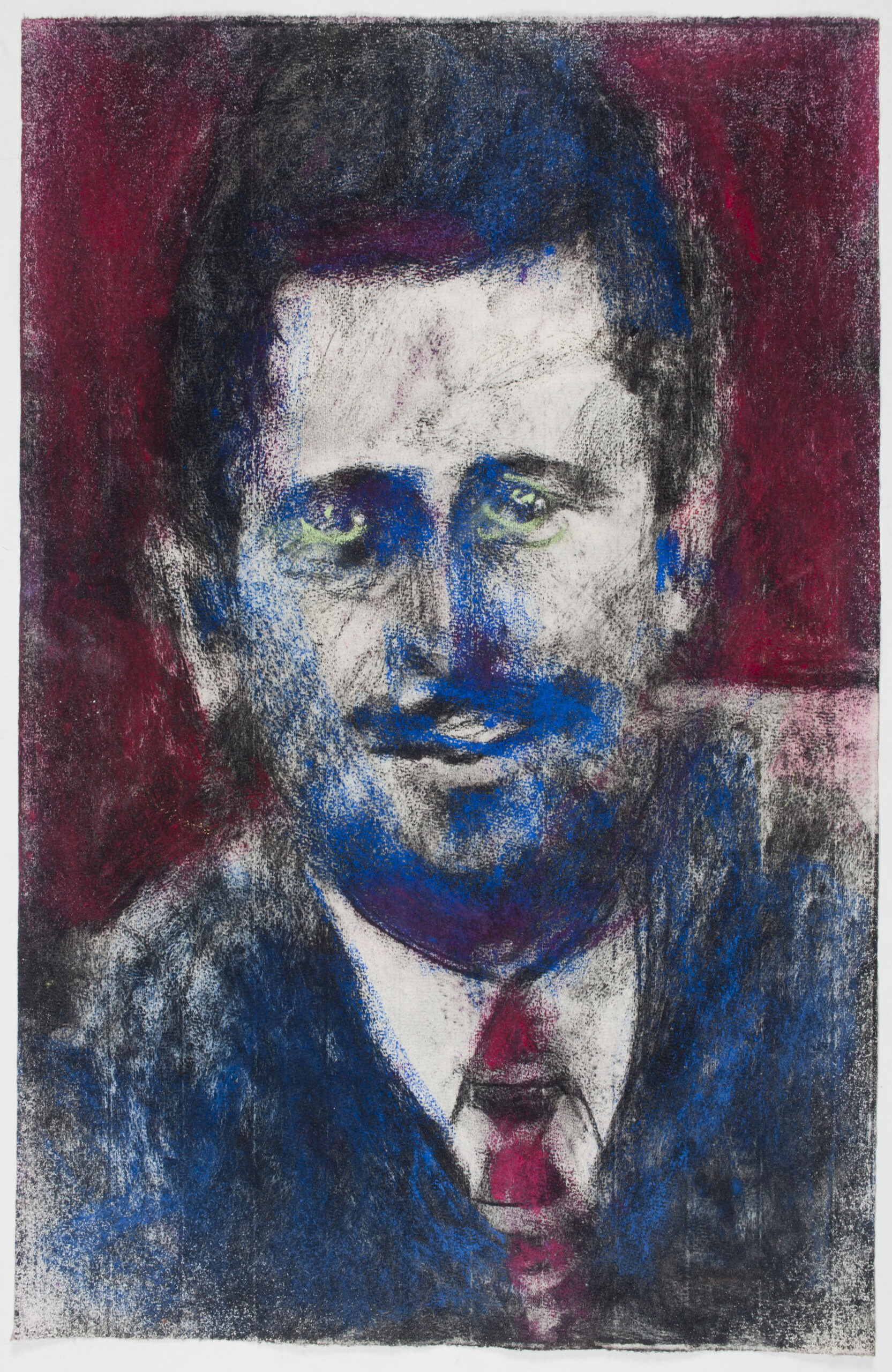
Formen des Menschseins, Maske und Gesicht

Bäume und Sträucher
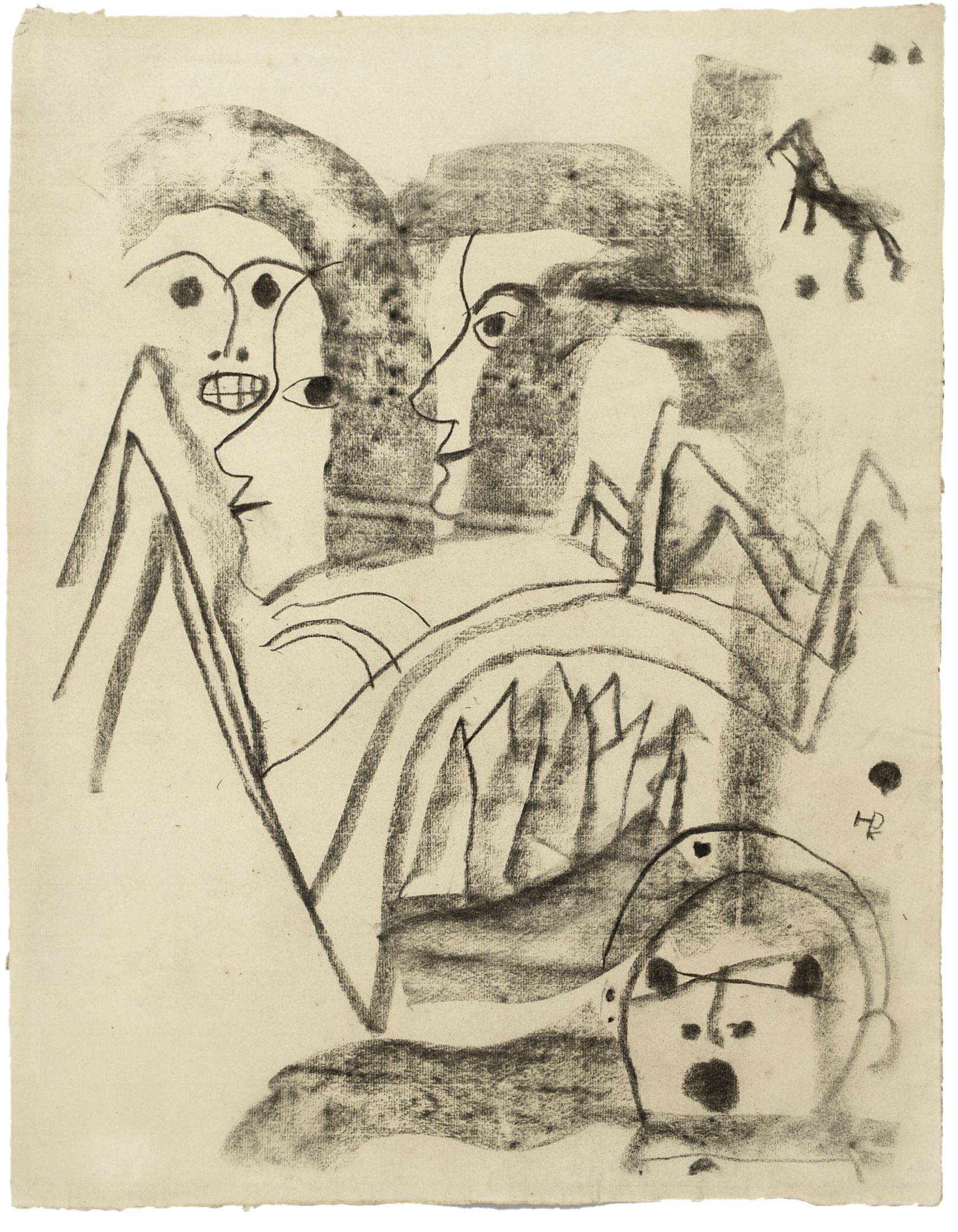
Gesichter
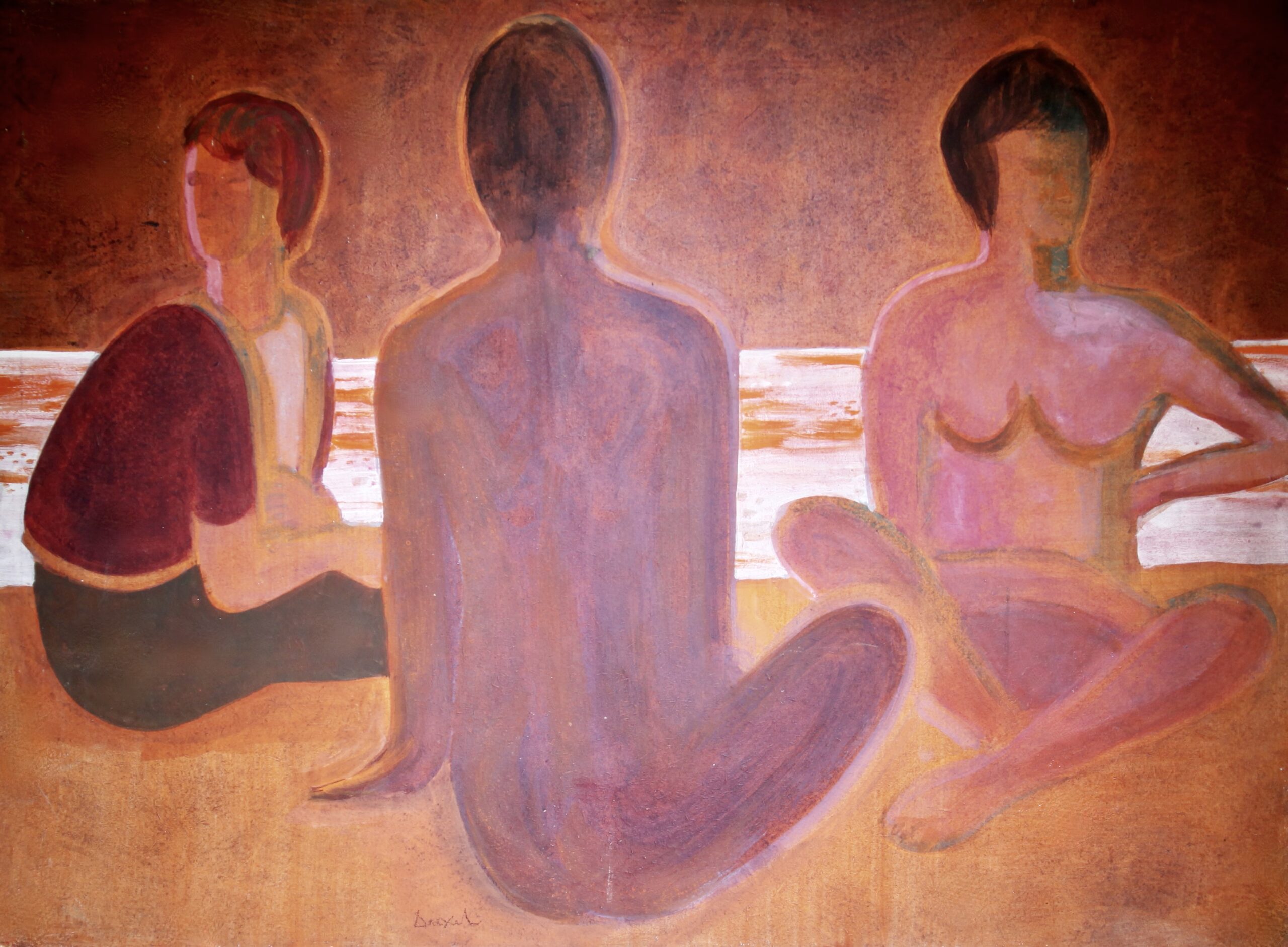
3 Sitzende

Pinke Vasen

Figuren

Waldlandschaft
